A small business owner usually doesn’t wake up thinking, “I need a better POS system today.” It’s more like this: the lunch rush hits, the line grows, the register freezes for the third time this week, and you can feel customers shifting their weight, wondering if they should stay or go. That’s the moment when a modern, fast POS stops being “nice to have” and becomes the thing that keeps the whole day from falling apart.
When the line is out the door
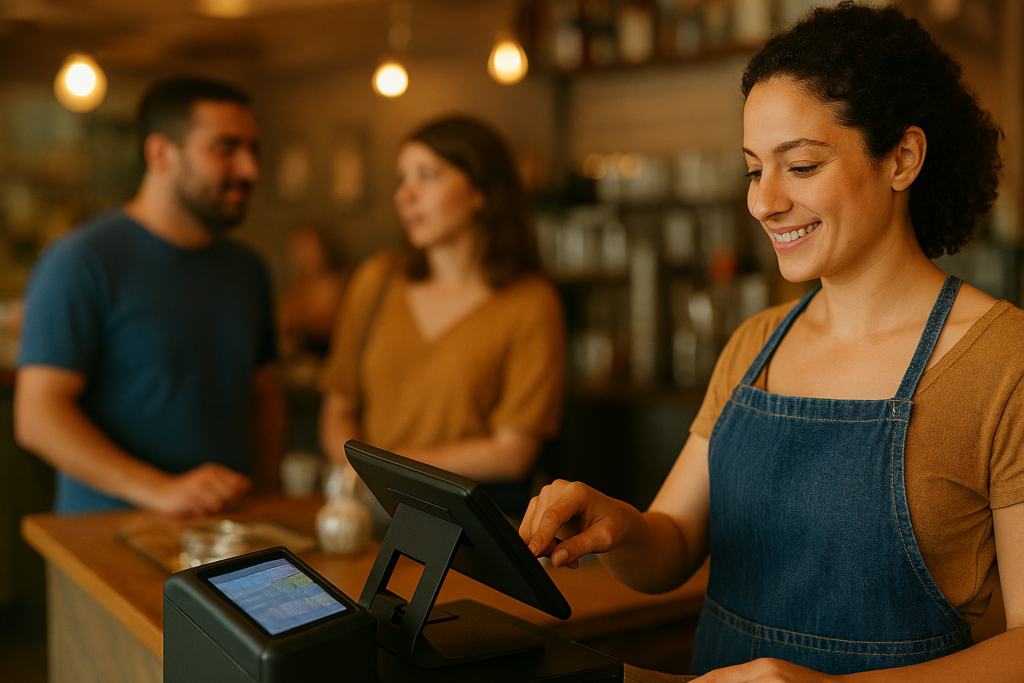
Picture a busy Saturday. A couple of regulars are chatting at the counter, a new customer is squinting at the menu, and your staff is doing that subtle panic-smile because the POS is lagging again. Every second feels like ten.
Now imagine the opposite: the POS responds instantly. Items ring up cleanly, payments process without hesitation, and your team moves with confidence instead of caution. Customers feel it too—there’s a rhythm to the place, a sense that everything works.
A fast POS doesn’t just speed up transactions. It changes the energy of the entire front counter.
When your systems talk to each other
Most owners don’t realise how much time they lose to tiny, repetitive tasks until those tasks disappear. That’s what happens when your POS integrates with the tools you already use.
- QuickBooks: the end of late-night bookkeeping
You close for the night, lock the door, and instead of sitting down with receipts and spreadsheets, you go home. Sales sync automatically. Reports are already waiting. Your accountant stops sending those “just checking on this number” emails. - DoorDash and delivery apps: no more tablet chaos
Before integration, you’re juggling three devices, trying to keep menus consistent, and retyping orders while customers stare. After integration, orders flow directly into the POS as they come from your website. No double entry. No missed tickets. No “Wait, which tablet was that on?” - Age Verification: fewer awkward moments
Your new cashier doesn’t have to guess whether someone looks 21. The POS prompts them, scans the ID, and logs it. Compliance becomes automatic instead of stressful.
And the rest: loyalty, inventory, marketing
This is where it gets fun.- Inventory updates itself as items sell.
- Loyalty points apply without anyone having to remember a punch card.
- Marketing tools know who your regulars are and what they love.
- It feels like the business is finally working with you instead of against you.
When your data finally makes sense
Most owners have a gut feeling about what’s selling, what’s slow, and when the rush hits. But gut feelings get fuzzy. Integrated data doesn’t.
You start seeing patterns:
• The sandwich that always sells out on Fridays.
• The slow hour that could use a promo.
• The employee who somehow handles 20% more transactions without errors.
It’s not about becoming a data analyst. It’s about having the kind of clarity that makes decisions easier, not heavier.
When the workload gets lighter
A modern POS quietly removes dozens of tiny frustrations you’ve learned to tolerate.
No more retyping orders.
No more reconciling mismatched totals.
No more guessing whether the ID was valid.
No more “Why is this tablet beeping again?” moments.
Your staff feels the difference. Your customers feel the difference. And you feel it most of all—usually around the time you get home earlier than expected.
When your business is ready for whatever comes next
Maybe you can add a second location. Maybe you start offering online ordering. Maybe you partner with a new delivery service. A flexible POS doesn’t make you start over—it grows with you.
You plug in new tools like they’re apps on a phone. You stay compliant as rules change. You keep up with customer expectations without having to rebuild your entire workflow.
It’s the kind of system that doesn’t just solve today’s problems—it keeps tomorrow’s from becoming problems in the first place.